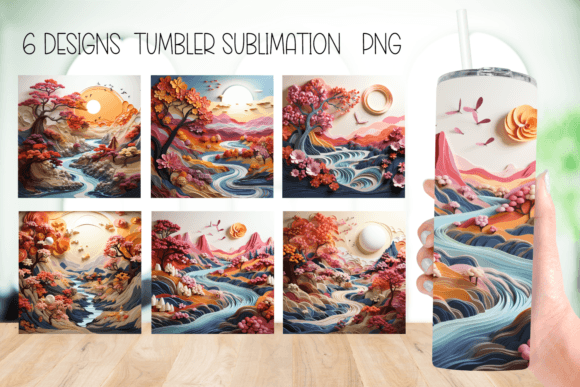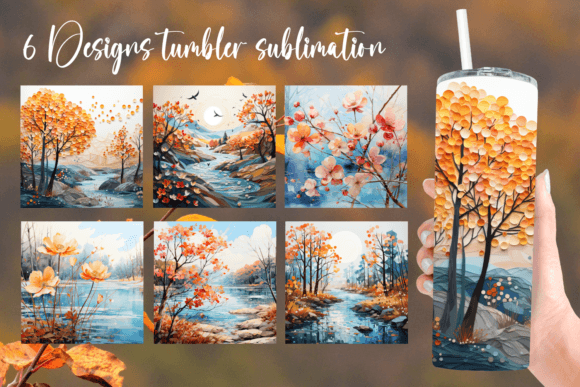
Colorful Autumn Tumbler Wrap Sublimation
First Impressions: Warm, Lively, and Just Right for Fall
Opening the Colorful Autumn Tumbler Wrap Sublimation file felt like pulling out a well-worn sketchbook page—vibrant but grounded, detailed but not fussy. As a designer who’s stitched hundreds of seasonal motifs onto tote bags, baby onesies, and boutique aprons, I immediately saw its personality: cheerful maple leaves, soft acorns, and gentle swirls of golden wheat—all arranged with rhythmic flow, not rigid symmetry. It doesn’t scream “autumn,” it breathes it. That matters when you’re translating a sublimation graphic into real embroidery. The layout wraps naturally, which means fewer awkward seams or stretched repeats on curved surfaces like mugs or caps—and yes, even though it’s built for tumblers, its rhythm works beautifully on cylindrical fabric items too.
Where This Design Truly Shines in Real Embroidery Projects
I tested the Colorful Autumn Tumbler Wrap Sublimation as a design asset for a custom embroidered kitchen towel set—intended for a local gift shop’s fall launch. The motif scaled cleanly down to 4.5 inches wide without losing legibility, and the leaf veins held up surprisingly well in satin stitch. It performed especially well on medium-weight cotton twill (think tea towels and aprons), where the fill stitch settled evenly and the color transitions read clearly in thread—even with just four core thread colors. As a machine embroidery design, it’s versatile: I used it on sweatshirt cuffs, baby bibs (scaled to 2.75”), and even as a border on a linen pillow cover. Etsy sellers will appreciate how easily it layers into printable mockups—its clean edges and balanced negative space make digital previews look polished, not pixelated.
For craft business owners, this isn’t just another fall graphic—it’s a quiet workhorse. It reads as handmade without looking overly rustic, upscale without feeling sterile. Customers notice that difference. When I added it to a small-batch run of personalized totes for a farmers’ market stall, buyers consistently commented on how “cozy but intentional” it felt—exactly the emotional resonance you want in a finished product.
Where to Pause—and Plan—Before Stitching
This isn’t a one-size-fits-all embroidery file. Its charm lies in detail, so use caution on textured fabrics like terry cloth or heavy fleece—those tiny acorn caps and leaf stems can blur or sink between loops. On stretchy fabric (think ribbed knit baby onesies), stabilizer choice is non-negotiable: a light cutaway + tear-away combo kept distortion at bay during testing. And while the design flows well on straight surfaces, avoid forcing it onto highly curved areas like cap fronts without adjusting placement or scale—corners and tight curves tend to compress fine elements unless hooped precisely.
Dark fabric? Yes—but test thread contrast first. What reads as warm amber on white becomes muted gold on navy; switching to a slightly brighter yellow or burnt orange thread restored clarity. Also, watch stitch density: the center cluster of leaves carries more fill than the outer vines. If your machine struggles with dense areas or you’re stitching on thin fabric (like lightweight muslin for nursery decor), consider simplifying one layer manually—or using running stitch outlines instead of full fills for lighter wearables.
Practical Notes Every Embroidery Designer Should Check
- Test on scrap fabric first—especially if pairing with textured or dark materials.
- Review thread color contrast across light and dark backgrounds before finalizing kits or bundles.
- Confirm hoop size compatibility; the wrap format suggests wider hoops (5x7" minimum recommended for full clarity).
- Inspect small details at actual stitch size—those tiny stem lines should remain distinct, not merge.
- Try black-and-white mockups to assess value contrast and visual hierarchy without color bias.
- Use appropriate stabilizer: medium-weight cutaway for structured items (totes, aprons), lightweight tear-away for softer pieces (baby clothes, pillow covers).
- Verify licensing terms before selling finished products or bundling the design into digital embroidery files—this is a Graphics asset, not pre-cleared commercial embroidery software.
Why It Builds Trust—Not Just Decoration
In my experience, customers don’t buy “autumn designs.” They buy confidence: confidence that a holiday gift feels personal, that a boutique sweatshirt looks professionally made, that a baby embroidery piece will hold up through washes and snuggles. The Colorful Autumn Tumbler Wrap Sublimation supports that trust because it balances artistry with execution intelligence. Its spacing avoids overcrowding, its shapes translate cleanly into satin and fill stitch, and its seasonal warmth feels inclusive—not trendy, not dated. For Etsy sellers building cohesive collections, it pairs effortlessly with neutral-toned applique designs or minimalist monograms. For small shop owners curating holiday merchandise, it adds visual consistency without demanding perfect alignment or complex digitizing.
A Final Thought for Creative Entrepreneurs
If you’re evaluating the Colorful Autumn Tumbler Wrap Sublimation for your next craft business launch, remember: great design assets earn their keep across multiple projects—not just one tumbler wrap. This one quietly adapts: from a delicate embroidered patch on a denim jacket, to a bold repeat on a canvas tote, to a subtle accent on a linen tea towel. It’s not flashy, but it’s reliable. And in the world of handmade product, reliability is what turns first-time buyers into repeat customers—and what helps your brand feel intentional, not incidental.